
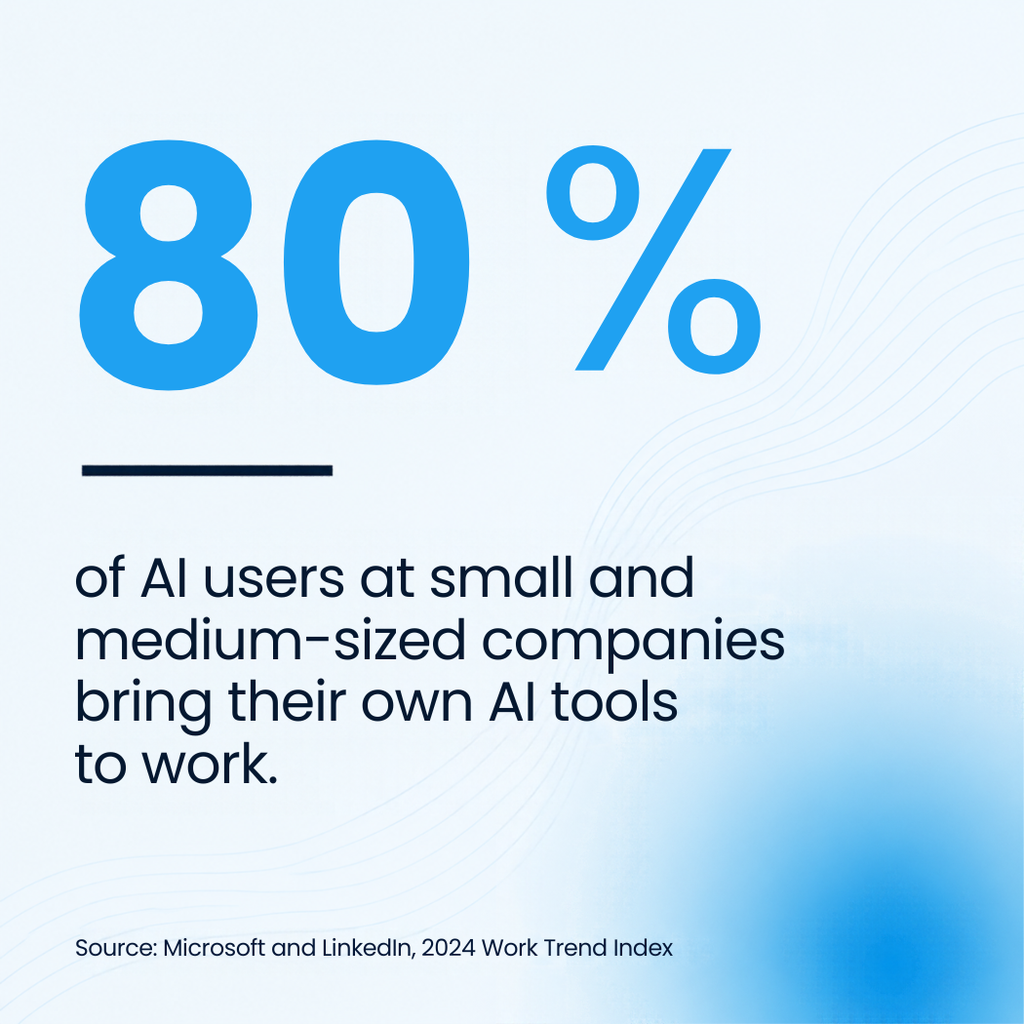
80% of AI users at small and medium-sized companies bring their own tools to work. Here’s how the firms that handled shadow IT well responded, and why the same three steps work for AI.
Your staff are pasting client notes, proposals and spreadsheets into chatbots. Most of them mean well; they want to work faster. Without a policy, though, nobody knows which tools hold your data, how long they keep it, or whether it trains someone else’s model.
Bans failed in the cloud years, and they will fail again. A ban pushes the work onto personal phones and home accounts, where you see even less. The firms that handled shadow IT well took three steps instead:
- Find out what people already use. A short, anonymous survey works, as long as nobody is punished for the answers.
- Approve a short list of tools, on business terms that control how your data is stored and used.
- Write one page of rules: what data may go in, what may not, and who to ask when in doubt.
That page is where AI governance starts for an SME. The Second Migration covers what comes next: a workload-by-risk matrix, a buying stance for a market where open models cap prices, and five moves for the next 12 months.
Read the full paper:
The Second Migration – What the Cloud Years Teach SME Leaders about AI


